Why & When I deliver Black & White Photos
The Power Of simplicity
Colour is the heartbeat of a wedding day. The flowers, the styling, the warm tones of a summer ceremony or the deep greens of a countryside venue – it all plays a huge role in how the day feels and how the photos tell that story. On average, around 90% of a wedding gallery I deliver is in colour, because that’s how we experience life: vibrantly, naturally and with all the subtle tones that shape our memories.
But every now and then, a moment appears that asks for something different. Something quieter, more distilled, more focused. That’s where black and white comes in.

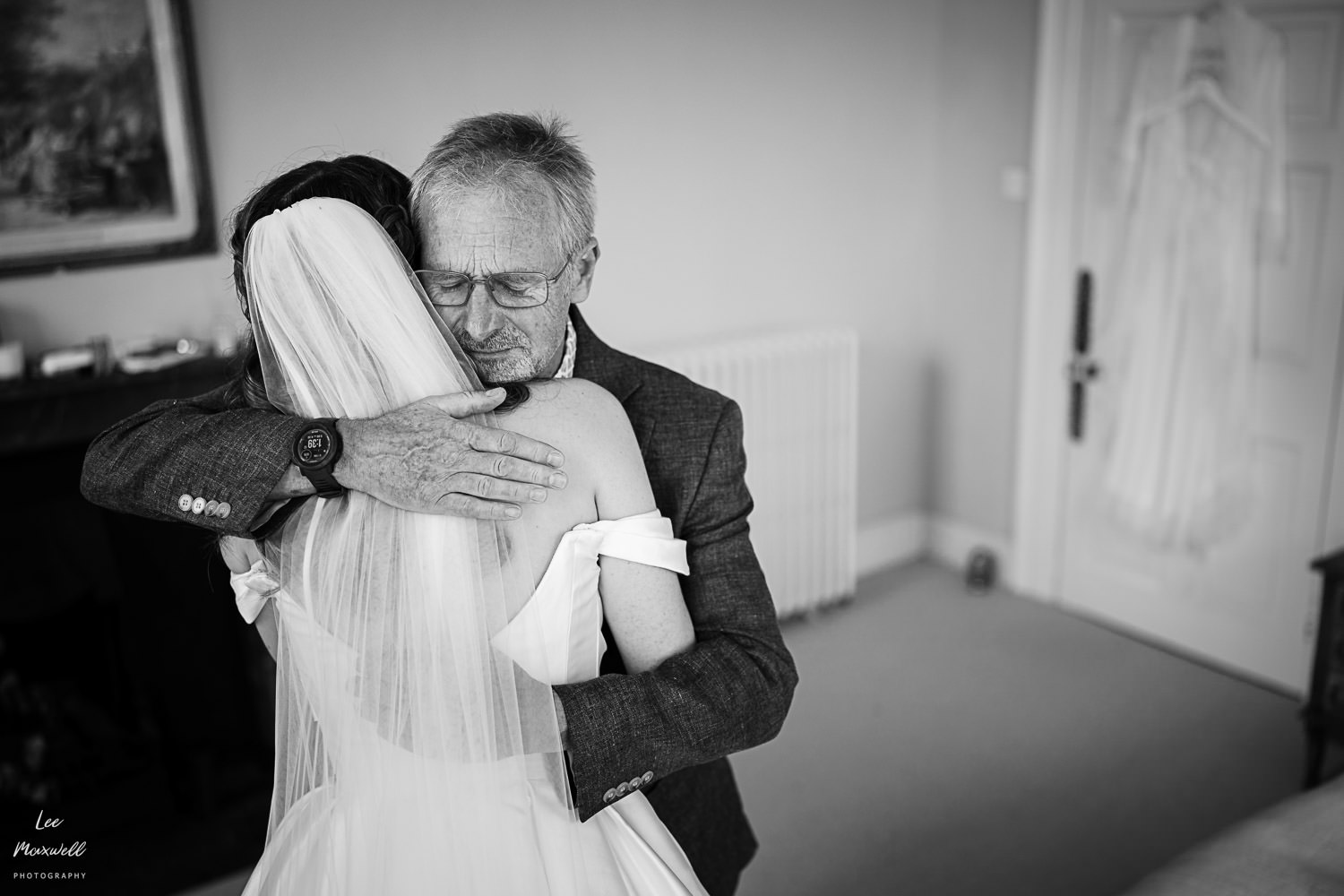
This is an example of where I feel a black and white edit adds to the image. This is one frame from Lucia & Mark’s wedding, you can see their Launcells Barton wedding here. It’s one of my favourites from their collection. This is Lucia’s dad looking proud during her vows to Mark, it’s a moment that says everything about them as father and daughter. I knew when I took this photo it would later become monochrome. The scene within the church, the expression and the framing leant into the timeless look of black and white.
There’s a running joke in photography circles that black and white is what we turn to when the light isn’t great or when colours are working against us – and yes, occasionally there’s some truth in that. Harsh mixed lighting or unflattering colour casts can be distracting. But the reality is that my decision to convert a photo to black and white is almost always emotional, not technical.
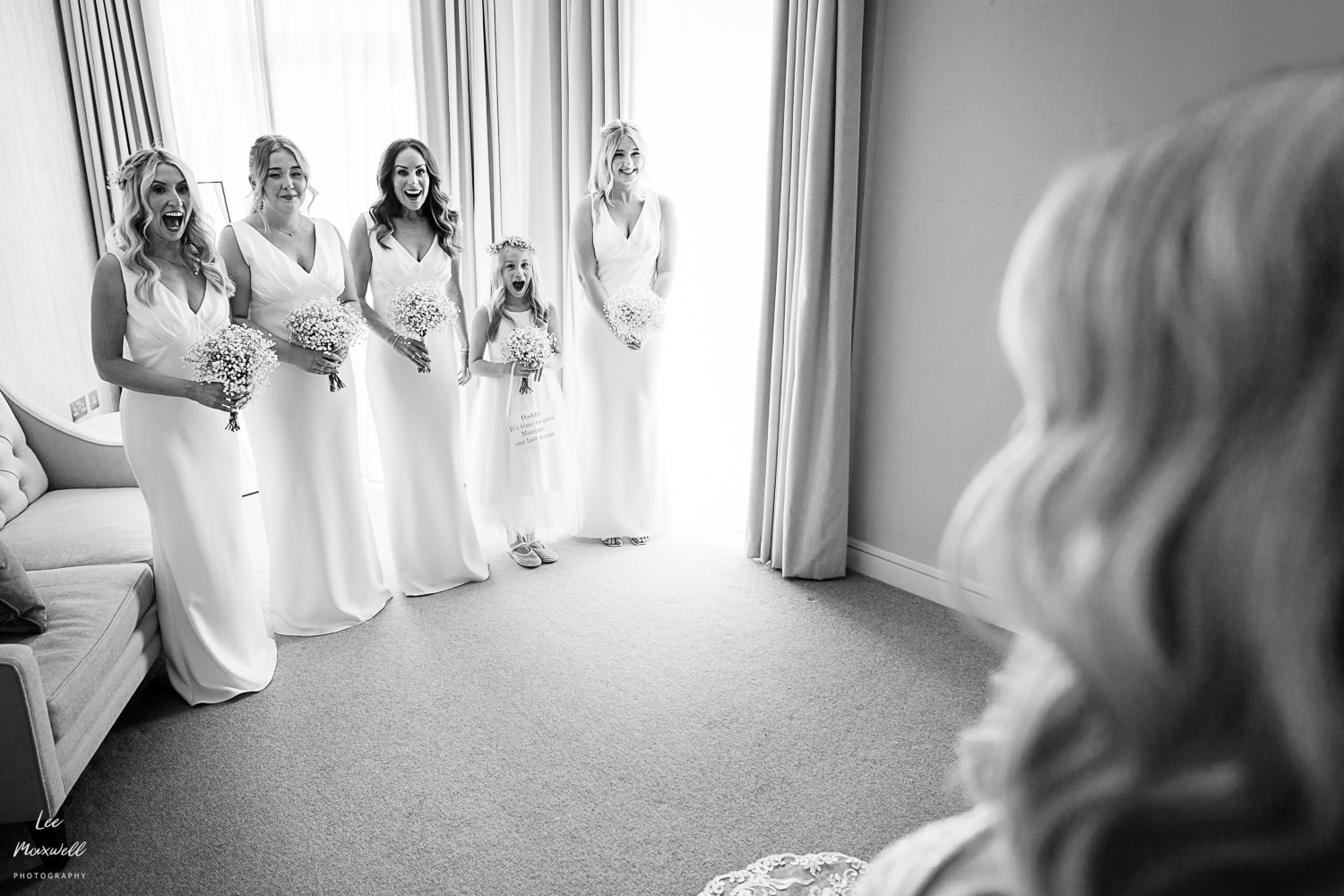
Black and white has a unique way of stripping everything back to its essence. With the colour removed, distractions fall away. Expressions become clearer. Touch feels more intimate. Emotions rise to the surface in a way that can sometimes get lost when your eye is juggling too many visual elements at once. A split-second between a bride and her mum, a hand squeeze during the vows, or a quiet moment just before walking into the ceremony – these can hit differently in monochrome.
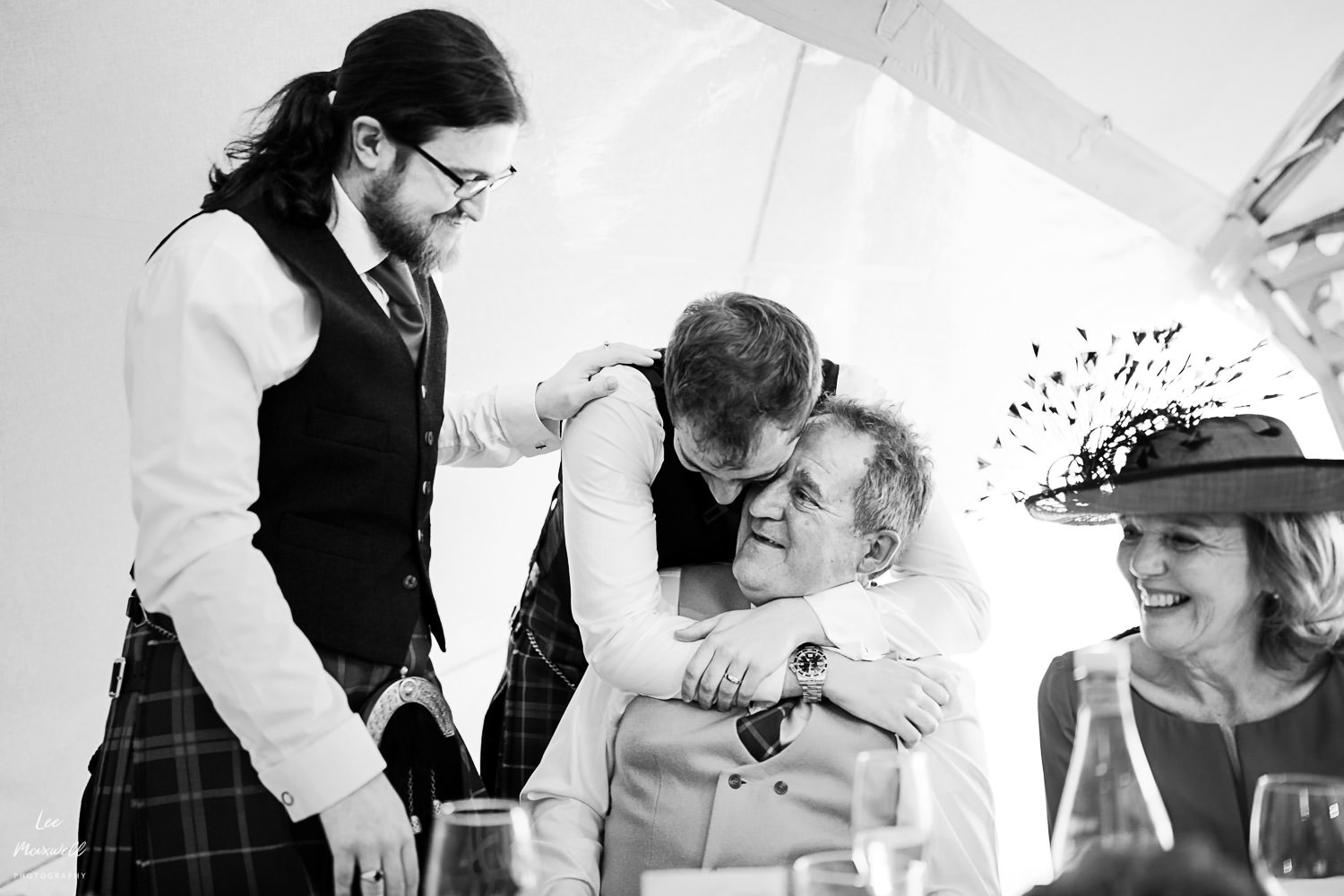
You might not know, but all photos start in colour in most digital cameras, and converted to black and white, often in Adobe Lightroom. It’s not just one click and done, it’s a process, like colour, to edit the image to match the desired style. An adjustment to exposure, contrast, and most importantly for me, the tone curve. Where some like to add grain to a photo, I prefer a cleaner image that will print beautifully.
There’s a timelessness to black and white that colour simply can’t replicate. It’s rooted in the origins of photography itself, long before digital sensors and colour profiles existed. Because of that history, black-and-white images often carry a documentary weight, a sense that you’re looking at something honest and enduring. Unlike colour edits, which trend in and out (deep greens, desaturated tones, heavy contrast — we’ve all seen the cycles), black and white remains largely immune. Its simplicity protects it from looking dated.
When I convert an image to black and white, it’s because I feel it enhances the moment. It adds depth. It clarifies emotion. It tells the story in a way that colour can’t. It’s never a random decision and never done to “pad out” a gallery. In fact, I’d much rather deliver a smaller number of black-and-white images that genuinely benefit from the treatment than a large handful that don’t need it.
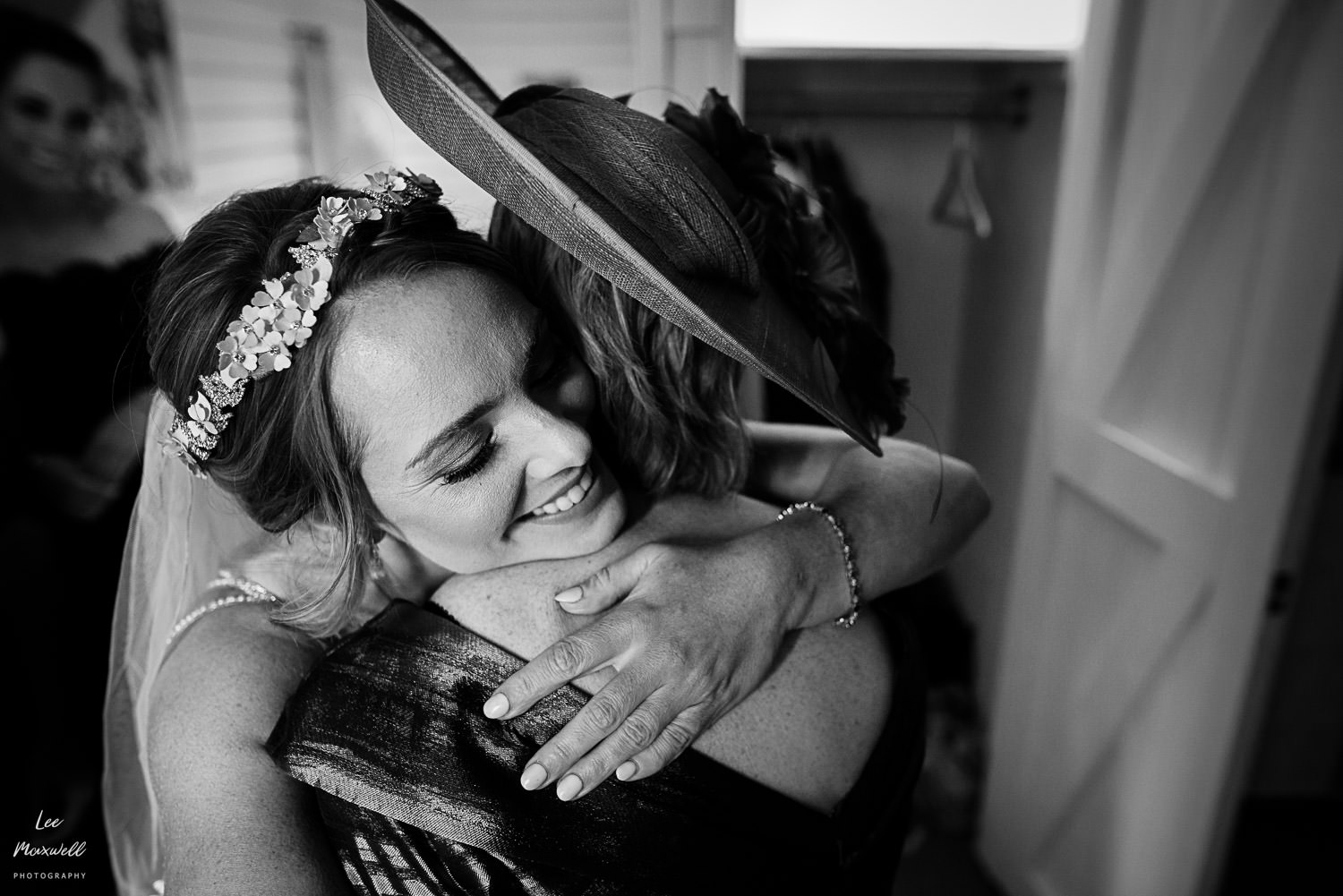
I see black and white as a complement, not a replacement, to the colour story of your day. Together, they create a rhythm: colour celebrates the energy and atmosphere, while black and white grounds the quieter, more powerful moments. It’s another tool to honour the emotion, meaning, and personality of your wedding, chosen with intention every single time.
About the Author
Lee Maxwell is a wedding photographer based in Devon, specialising in capturing unscripted moments and the authentic atmosphere of a wedding day. With over a decade of experience photographing large and intimate weddings, all with different lighting conditions and schedules to navigate, Lee’s photography has been featured by leading publications like Rangefinder Magazine and Wed Magazine. His approach is rooted in being an unobtrusive presence, allowing real moments to unfold naturally to tell a truer story of the day. When writing these wedding guides, Lee draws on his extensive on-the-day knowledge to help couples prioritise experience over poses, ensuring their memories are as effortless and heartfelt as the day itself. You can explore more of his work in his portfolio.